What “Wholesale Kitchen Products” Actually Covers
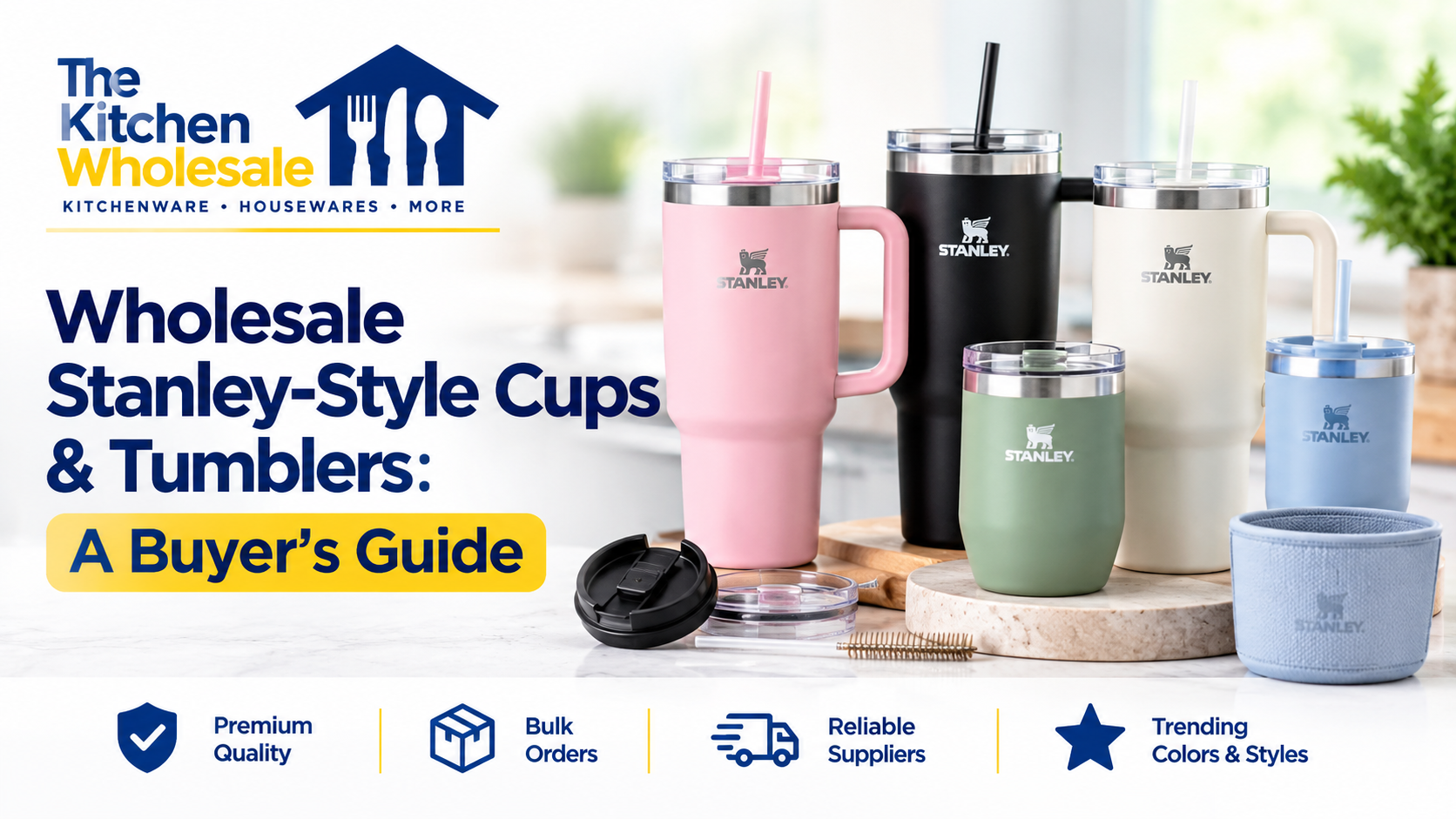
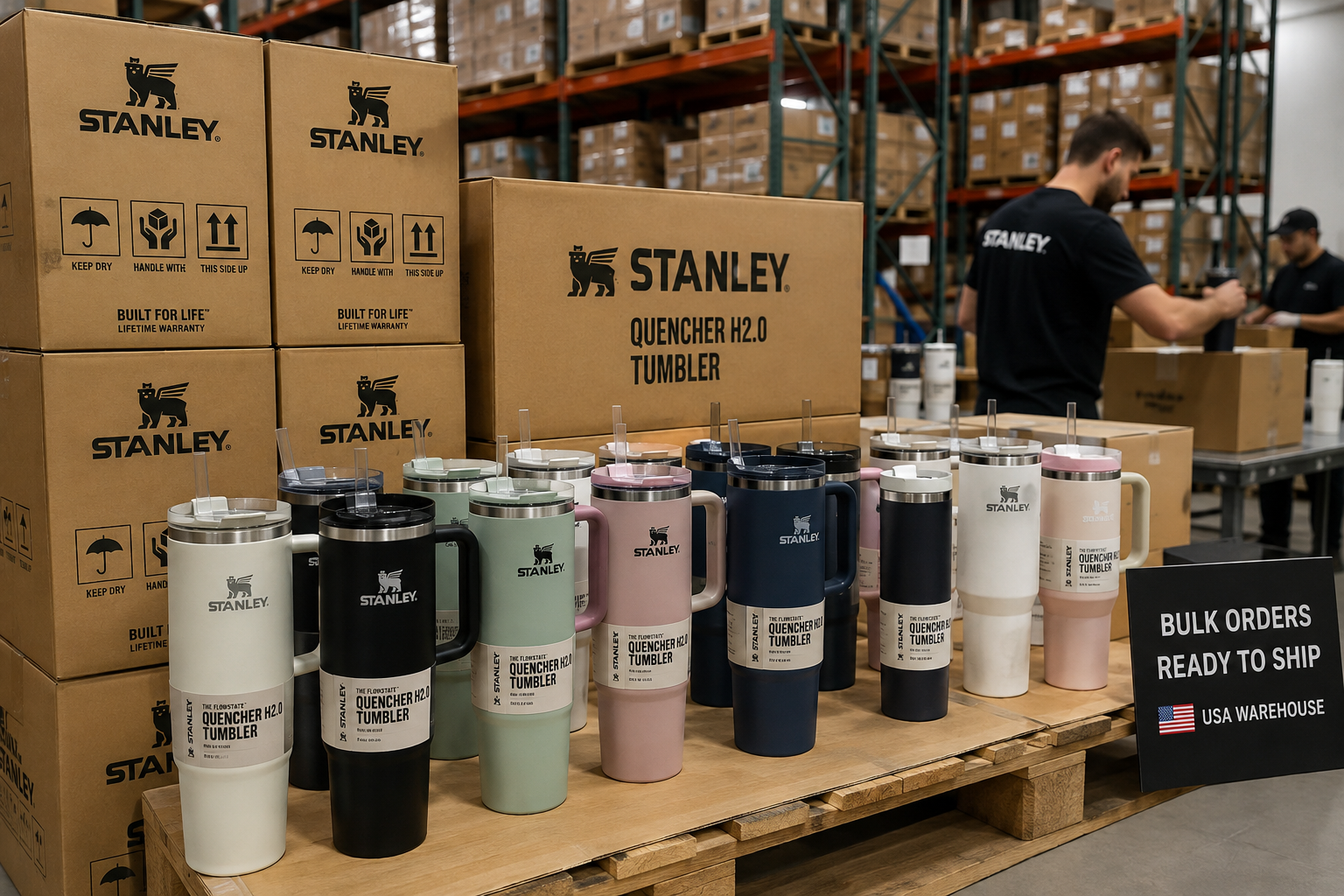
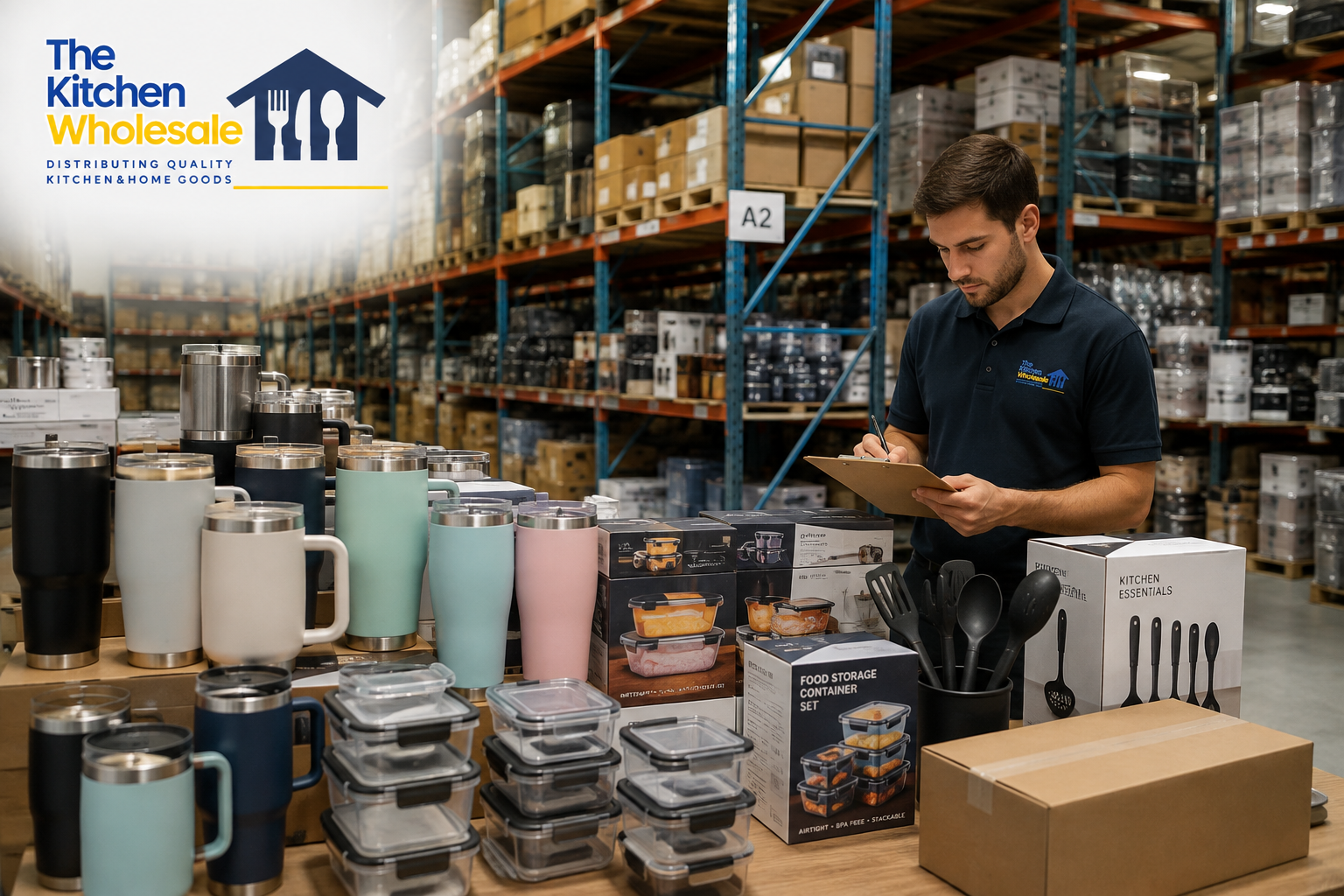
Kitchenware is a wider wholesale category than most people expect going in. It spans branded drinkware the insulated tumbler category in particular has exploded in demand over the past few years food storage systems built around clear, stackable, leak-proof containers, small kitchen equipment and countertop gadgets, and general cookware accessories. Buying wholesale means sourcing these directly from a distributor at bulk, below-retail pricing. The distributor has already negotiated volume pricing with manufacturers or secured inventory through closeout and overstock channels, and passes part of that discount on to businesses that are reselling or redistributing the products, rather than to individual shoppers buying one item at a time.
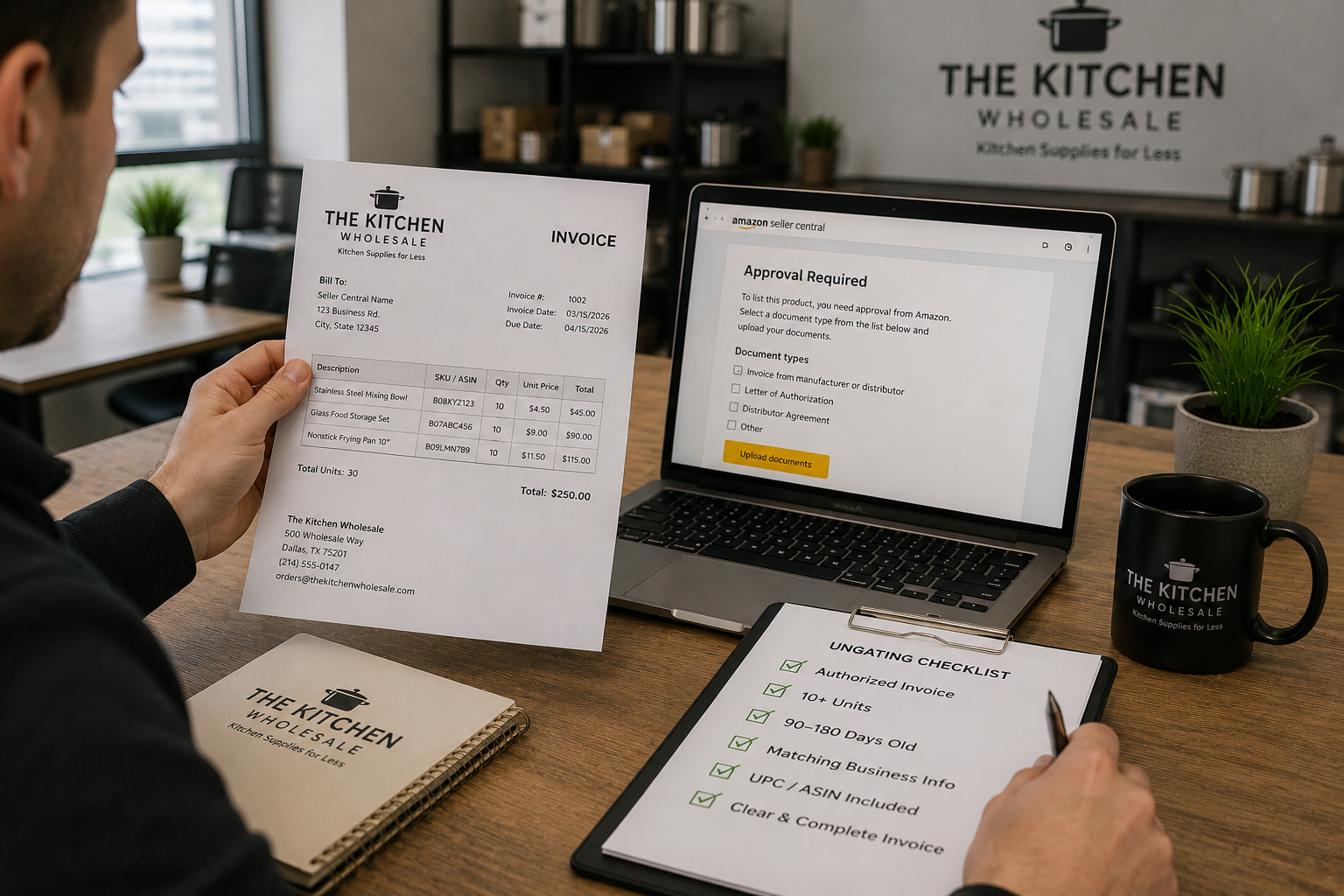
The appeal for a buyer isn’t only the lower unit price. It’s also consistency a wholesale account gives you a stable price list you can plan around, an invoice trail that some marketplaces require before they’ll let you list certain categories, and a real point of contact when an order needs adjusting. None of that comes with retail-arbitrage sourcing, where you’re at the mercy of whatever a store happens to have in stock that week.
Wholesale vs. Dropshipping vs. Retail Arbitrage
These three sourcing models get used interchangeably in casual conversation, but they work very differently in practice, and picking the wrong one for your stage of business is one of the most common early mistakes. Wholesale means buying inventory upfront in bulk and holding it yourself, which requires capital and storage space but gives you the best margins and full control over shipping speed and packaging. Dropshipping means listing a product without ever holding it your supplier ships directly to the customer when an order comes in which needs almost no upfront capital but comes with thinner margins, less control over delivery times, and less ability to verify product condition before it reaches the customer. Retail arbitrage means buying products at retail or big-box pricing and reselling them at a markup; it requires no supplier relationship at all, but the margins are usually too thin to build a real business on, and for branded products it frequently runs against the brand’s own resale policies.
Most established kitchenware resellers end up using wholesale as their primary model once they’ve identified which categories reliably sell, and we cover exactly how to think through that transition in a dedicated article later in this pack.
Who Actually Buys Kitchen Products Wholesale
- Independent housewares and gift retailers who need below-retail pricing to compete with big-box chains on the same recognizable brands
- Amazon, Walmart Marketplace, and TikTok Shop sellers who need invoiced, authentic inventory to satisfy marketplace category requirements
- Dropshipping and e-commerce businesses testing a kitchenware product line before committing capital to inventory
- Corporate gifting and promotional products businesses buying drinkware or gift sets in bulk for branding or client gifts
- Cafes, small hospitality businesses, and meal-prep services buying food storage systems at real operational volume
- Subscription box and curated gift-bundle businesses that need a wide catalog at a predictable unit cost
The Core Wholesale Kitchen Categories
A full-catalog kitchen wholesaler typically organizes its inventory around a handful of anchor categories, each with its own buying pattern. Insulated drinkware and tumblers is currently the single highest-demand category, driven by sustained consumer interest in premium reusable cups. Food storage systems stackable, BPA-free containers built for meal prep and pantry organization are a steadier, less trend-driven category with strong repeat-purchase behavior. Small kitchen equipment and countertop gadgets round out the catalog and tend to have the widest range of buyer types, from individual resellers to small hospitality operations. Each of these gets a full, dedicated buyer’s guide later in this pack, along with a practical article on evaluating suppliers and one on choosing between dropshipping and wholesale specifically.
How to Open a Wholesale Kitchen Products Account, Step by Step
The process is more paperwork than negotiation, and it’s largely the same across the industry. First, gather your documentation: a resale certificate or sales tax ID, which is what legally allows you to buy inventory without paying sales tax on items you intend to resell, and an EIN or business registration confirming you’re operating as an actual business rather than an individual buyer. Second, submit an application through the distributor’s wholesale portal or by contacting their sales team directly — most ask for basic details about your business type and expected order volume. Third, expect a review period; distributors verify your documentation before granting account access, and turnaround time varies by supplier. Fourth, place your opening order, which often needs to meet a minimum order value or unit count. From there, most accounts move to a repeatable reorder process through a wholesale price list or online portal, so you’re not renegotiating terms every time you restock.
Understanding Minimum Order Quantities and Pricing Tiers
Minimum order quantities (MOQs) exist because processing, packing, and shipping a small order costs a distributor roughly the same in labor as a larger one, even though the revenue is much smaller — the minimum protects that math. MOQs can apply per SKU (you need to order a certain quantity of one item) or at the order level (your total order needs to reach a minimum dollar value across any mix of products). Many distributors also offer volume pricing tiers, where the per-unit price drops as your order quantity increases past certain thresholds. Understanding which structure a supplier uses before you place your first order helps you plan a smarter mix — buying just enough of a slower-moving item to hit a minimum, rather than over-committing to stock you’re not confident will sell.
What to Actually Look for in a Wholesale Kitchen Distributor
Price is the obvious factor, but it’s rarely what determines whether a wholesale relationship actually works longterm. Authenticity matters more than most new buyers expect, particularly for trending branded drinkware, where counterfeit and gray-market product is a real, documented problem a distributor who can speak clearly about where their inventory comes from is worth more than one offering a slightly lower price with no explanation. Shipping reliability matters just as much: a supplier with great pricing but inconsistent lead times will cost you more in stockouts and frustrated customers than you’ll save on the unit price. Catalog breadth is worth weighing too a distributor covering drinkware, food storage, and general kitchen goods together means one supplier relationship to manage instead of three. Finally, look closely at the return and damage policy before you order in bulk; kitchenware ships in volume, and breakage happens, so knowing exactly how a supplier handles it before you need to find out the hard way saves real frustration later.
Common Mistakes First-Time Wholesale Buyers Make
The most common mistake is overordering slow-moving SKUs just to hit a minimum order requirement, which ties up capital in inventory that takes months to sell through. A close second is not reading the return and damage policy until something actually arrives broken, at which point it’s too late to negotiate better terms. New buyers also frequently underestimate how much authenticity matters on trending items — chasing the lowest price on a viral product without asking basic sourcing questions is how counterfeit inventory ends up on a reseller’s shelf. Finally, many new buyers spread their first few orders across too many different suppliers trying to comparison-shop every category, when consolidating with one or two broad-catalog distributors usually gets better pricing and a stronger working relationship faster.
Frequently Asked Questions
Is there a minimum order to open a wholesale kitchen products account?
Most distributors set one, and it varies by supplier check directly with whichever distributor you’re evaluating before assuming a specific figure.
Do I need a business license to buy wholesale?
Yes. A resale certificate or EIN is standard across the industry, since wholesalers are required to verify they aren’t selling tax-free inventory to end consumers.
Can I buy wholesale kitchen products without a storefront?
Yes many wholesale buyers are online-only resellers, dropshippers, or Amazon/Walmart Marketplace sellers with no physical retail location. What matters to the distributor is your business registration and resale certificate, not whether you have a storefront.
How is wholesale pricing different from what I’d pay at a warehouse club?
Warehouse club pricing is still built for an individual shopper buying a large pack for personal use. True wholesale pricing is structured for resale from the ground up, removes the retail markup entirely, and typically scales down further as your order volume increases.