If you sell on Amazon, you’ve probably hit the “Approval Required” wall when trying to list certain kitchen products. This restriction known as gating https://thekitchenwholesale.com/about/ exists to protect customers from counterfeit, unsafe, or misrepresented products. Getting past it, or ungating, is one of the most misunderstood parts of running a profitable Amazon FBA business.
The good news: ungating in the kitchen category isn’t complicated once you understand what Amazon actually requires. This guide breaks down the exact documentation, process, and common mistakes sellers make so you can get approved faster and start sourcing profitable kitchen supplies Wholesale without wasting weeks on rejected applications.
Why Is the Kitchen Category Gated on Amazon?
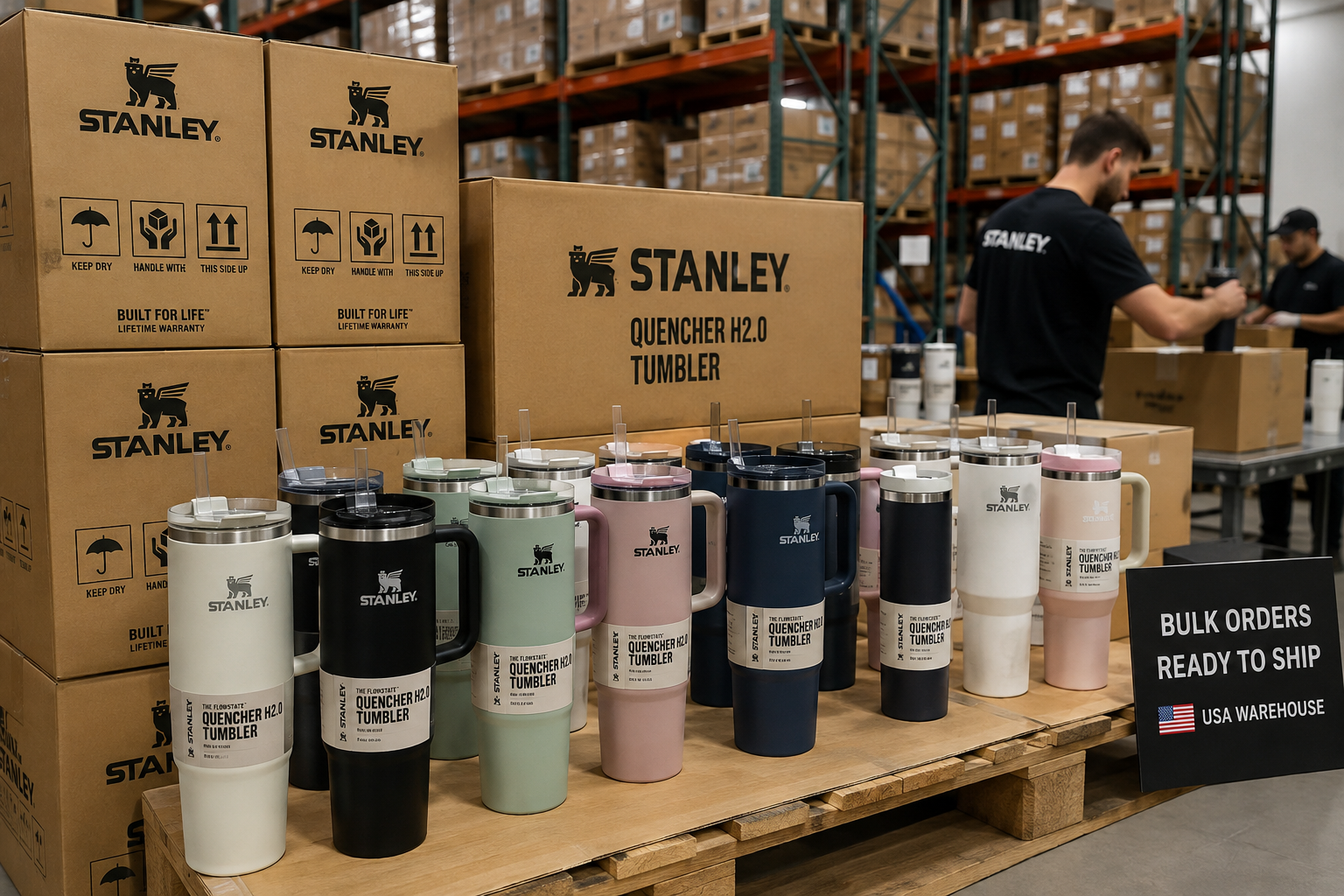
Amazon restricts certain kitchen subcategories particularly branded cookware, food storage, and drinkware from brands like Stanley, Rubbermaid, YETI, and Sistema to prevent counterfeit listings and protect brand equity. When you try to list a restricted ASIN, Amazon asks you to prove that you’re sourcing from a legitimate, authorized supply chain before granting selling rights.
This is where most new sellers get stuck, because they don’t know which documents actually satisfy Amazon’s verification system.
What Documents Does Amazon Require for Ungating?
Amazon’s ungating review typically asks for one or more of the following, depending on the brand and category sensitivity:
1. Amazon-Accepted Invoices for Ungating
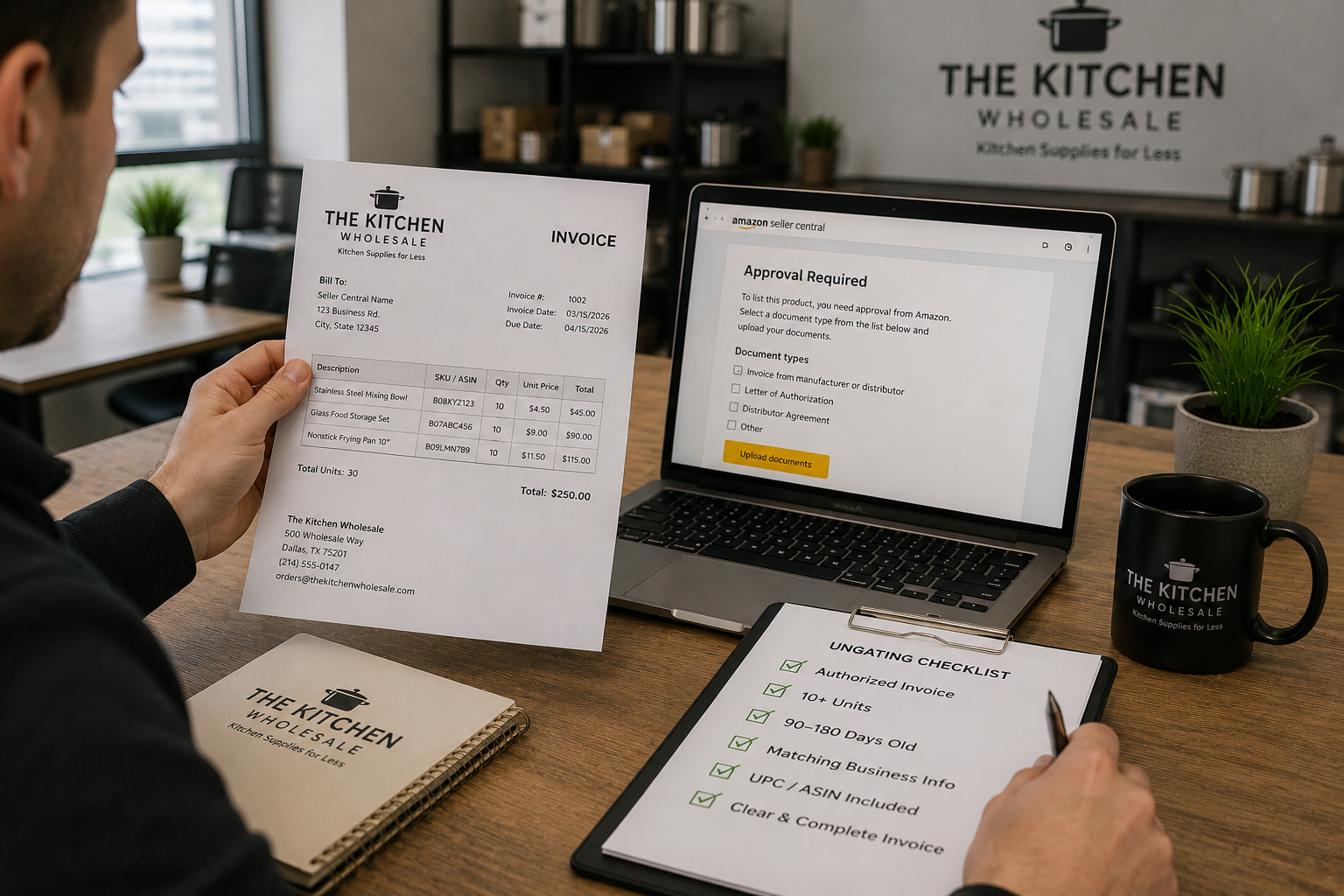
This is the single most important document in almost every ungating application. A valid, Amazon-accepted invoice must:
- Come from an authorized wholesale distributor never a retail receipt from Walmart, Costco, or Target
- Show a minimum of 10 units of the specific product or brand you’re applying for
- Be dated within 90 to 180 days, depending on the category (check your exact application window in Seller Central)
- Include the supplier’s full business name, address, phone number, and email
- Match your Seller Central registered business name and address exactly
- Include the product’s UPC, model number, or ASIN
- Be a clean, high-resolution scan not a handwritten note or phone photo
Amazon’s system is built specifically to catch mismatched details, so even small inconsistencies (like a shipping address that doesn’t match your seller account) can cause automatic rejection.
2. Letter of Authorization for Amazon FBA
A Letter of Authorization (LOA) is a formal document from the brand owner or authorized distributor confirming that you have permission to resell their products on Amazon. LOAs typically come into play for:
- Hard-gated or brand-restricted listings
- Categories where invoice-only approval isn’t accepted
- Sellers working directly with larger, established distributors
Not every ungating request needs an LOA many categories accept a compliant invoice alone. But when a brand specifically requires authorization, no invoice can substitute for it, so having a supplier who can issue one saves significant time.
3. Verified Supply Chain Documentation
Beyond invoices and LOAs, Amazon may request supporting documentation that proves your supplier is a legitimate, verifiable business not a reseller of unknown origin. This includes business registration details, distributor agreements, or proof of direct relationships with the brand or manufacturer. Sourcing from Alibaba or unverified overseas suppliers is one of the most common reasons applications get rejected, since Amazon can rarely verify those supply chains.
LOA vs Invoice for Amazon Approval: What’s the Difference?
Sellers often confuse these two documents, so here’s the simple breakdown:
| Invoice | LOA | |
| What it proves | You purchased real inventory from a legitimate distributor | You have permission from the brand to sell their products |
| When it’s required | Almost all ungating applications | Hard gated brands or specific approval requests |
| Who issues it | Your wholesale supplier | The brand owner or authorized distributor |
| Can one replace the other? | No for hard-gated brands, an invoice alone won’t work | No most categories still require a valid invoice too |
In short: an invoice proves purchase, an LOA proves permission. For most kitchen category applications, a compliant invoice is enough. For specific brand locked listings, you’ll need both.
Amazon FBA Invoice Requirements Checklist
Before you submit your application, run through this checklist:
- ✅ Invoice is from an authorized wholesale distributor (not a retail store)
- ✅ Minimum of 10 units of the product listed
- ✅ Dated within the 90–180 day window required for your category
- ✅ Business name and address match your Seller Central account exactly
- ✅ Supplier’s full contact information is visible
- ✅ Product UPC, model number, or ASIN is included
- ✅ Document is a clear digital scan, not handwritten or blurry
Missing even one of these details is the leading cause of rejected applications.
How to Get Ungated on Amazon Kitchen Category: Step-by-Step
- Check the restriction first. In Seller Central, use “Show Limitations” on the product listing to confirm whether approval is required.
- Source from an authorized wholesale distributor who can provide Amazon-compliant invoices and, if needed, an LOA.
- Purchase at least 10 units of the product or brand you’re applying to sell.
- Request your invoice with all required details supplier info, quantity, date, and matching business address.
- Submit your ungating application through Inventory → Add a Product, uploading your invoice (and LOA, if applicable).
- Respond quickly if Amazon requests additional information delays beyond 24–48 hours can time out your application.
- Maintain healthy account metrics (Order Defect Rate under 1%, Late Shipment Rate under 4%) since Amazon also factors in seller performance.
Common Reasons Ungating Applications Get Rejected
Most first-time DIY ungating attempts fail not because sellers did something wrong intentionally, but because of avoidable documentation errors:
- Invoice address doesn’t match Seller Central details
- Quantity below the 10-unit minimum
- Invoice dated outside the accepted window
- Using a retail receipt instead of a wholesale invoice
- Sourcing from an unverifiable or overseas supplier Amazon can’t confirm
This is exactly why working with a kitchen supplies wholesale distributor who already understands Amazon’s compliance standards makes such a measurable difference the paperwork is correct from day one instead of after two or three rejections.
Why Sourcing Matters More Than the Application Itself
Sellers often focus all their energy on filling out the application form, when the real success factor is where the invoice comes from. A supplier who regularly works with Amazon FBA sellers will already format invoices to Amazon’s exact standards, provide LOAs where applicable, and offer verified supply chain documentation removing the guesswork entirely.
This is where partnering with a USA-based, FBA-focused kitchen supplies wholesale distributor pays off. Instead of piecing together documentation from multiple unreliable sources, you get compliant invoices, verified supply chains, and LOAs in one place built specifically for sellers trying to get ungated in the kitchen category.
Frequently Asked Questions
Do I need an LOA to sell kitchen products on Amazon?
Not always. Most kitchen category listings only require a compliant wholesale invoice. An LOA is typically needed only for hard gated, brand-specific listings.
How many units do I need to purchase to get ungated?
Amazon generally requires proof of purchase of at least 10 units of the specific product or brand.
How old can my invoice be for Amazon approval?
Most categories accept invoices dated within 90 to 180 days, depending on the specific product or brand you’re applying for.
Can I use a retail receipt instead of a wholesale invoice?
No. Retail receipts from stores like Walmart or Costco are automatically rejected. Amazon requires a commercial wholesale invoice from an authorized distributor.
Why do most DIY ungating applications fail on the first try?
Most rejections come down to documentation issues mismatched business addresses, invoices outside the required date range, or unverifiable suppliers not the products themselves.
Final Thoughts
Getting ungated in Amazon’s kitchen category comes down to one thing: sourcing from a supplier who can provide compliant, verifiable documentation the first time. With the right invoice, LOA (when needed), and supply chain proof, most sellers can clear approval without the delays and rejections that trip up DIY attempts.
If you’re ready to source kitchen supplies wholesale with Amazon-ready documentation already built in, apply for a wholesale account and get access to LOAs, compliant invoices, and verified supply chain support from day one.